
Lab Alliance Ion Exchange Chromatography offers a sophisticated approach to achieving high analytical accuracy in biomolecule separation. By leveraging advanced stationary phases and real-time monitoring Ion Chromatography, you’re equipped to minimize errors and enhance throughput. This system doesn’t just streamline method development; it also supports seamless scalability from analytical to preparative processes. As you explore its capabilities, consider how these innovations can impact regulatory compliance and product safety in your field.
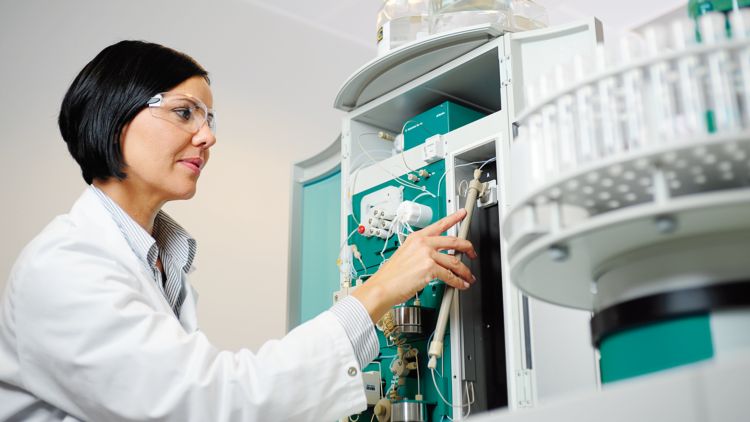
Understanding Ion Exchange Chromatography
Ion exchange chromatography (IEC) is a powerful technique used to separate and purify biomolecules based on their charge properties. You’ll encounter two primary forms of IEC: cation exchange and anion exchange.
In cation exchange, positively charged biomolecules are attracted to negatively charged resin, allowing you to selectively elute them based on their affinity to the resin. Conversely https://laballiance.com.my/, anion exchange targets negatively charged biomolecules, which bind to positively charged resin.
Understanding the pH and ionic strength of your buffer is vital, as these parameters influence the binding interactions. By manipulating these conditions, you can optimize separation efficiency.
Additionally, knowing the specific charge characteristics of your target biomolecules will help you choose the appropriate exchange method. Overall, mastering IEC enables you to achieve high-resolution separations, essential for applications in protein purification, enzyme analysis, and other biochemical studies.
Key Features of Lab Alliance’s Method
When selecting a method for ion exchange chromatography, Lab Alliance’s approach stands out due to its innovative features designed to enhance separation efficiency and reproducibility.
One key advantage is the use of high-resolution stationary phases, which greatly improves chromatographic efficiency by providing sharp peaks and reduced band broadening. This precision allows you to achieve accurate quantification and reliable results.
Additionally, Lab Alliance employs advanced software for real-time monitoring, allowing you to adjust parameters dynamically for best performance. Their system’s robust design minimizes downtime, ensuring consistent throughput.
You’ll also appreciate the user-friendly interface, which simplifies method development and reduces training time.
Moreover, the scalability of Lab Alliance’s method advantages means you can easily shift from analytical to preparative scale without compromising resolution.
This versatility makes it an ideal choice for both research and quality control applications, ultimately streamlining your analytical workflow.
Applications Across Various Industries
As industries increasingly demand high-purity separations, the applications of ion exchange chromatography have expanded considerably. In pharmaceutical analysis, this technique plays an essential role in the purification and characterization of active pharmaceutical ingredients (APIs) and excipients. Its ability to precisely separate charged molecules guarantees regulatory compliance and product safety.
In environmental monitoring, ion exchange chromatography helps detect and quantify contaminants in water and soil samples. By efficiently isolating ions, you can assess the presence of heavy metals or organic pollutants, providing crucial data for environmental protection efforts.
Moreover, this method is significant in food and beverage industries, guaranteeing the quality and safety of products by analyzing additives and potential contaminants.
The versatility of ion exchange chromatography across these sectors highlights its importance in achieving analytical accuracy and reliability, meeting the rigorous standards required in today’s market.

Benefits of Enhanced Analytical Accuracy
Achieving enhanced analytical accuracy in ion exchange chromatography greatly boosts the reliability of your results, guaranteeing that even trace contaminants are detected. This improved data precision allows you to make more informed decisions based on your analytical outcomes.
When measurement reliability is prioritized, you minimize the risk of false positives or negatives, which can lead to costly errors in product quality and compliance.
Moreover, with precise data, you can confidently track trends over time, enhancing your ability to identify potential issues early. This not only streamlines processes but also fosters trust among stakeholders, from regulatory bodies to end-users.
Enhanced analytical accuracy also facilitates method validation, guaranteeing that your protocols meet stringent industry standards.
Ultimately, investing in advanced ion exchange chromatography techniques guarantees that your analyses aren’t just accurate, but also reproducible, paving the way for greater scientific advancements in your field.
Future Trends in Ion Exchange Technology
While the landscape of ion exchange technology continues to evolve, several future trends are set to reshape its application across various industries. You’ll see future innovations focusing on miniaturization and automation, which will enhance throughput and reduce operational costs.
These advancements enable more efficient processing of samples, particularly in high-demand environments like pharmaceuticals and environmental monitoring.
Emerging applications in biotechnology and nanotechnology will also drive the evolution of ion exchange materials, leading to more selective and sensitive separation techniques.
You can expect the integration of artificial intelligence to optimize method development and troubleshoot analytical challenges in real-time.
Furthermore, sustainability will become a key driver, with a push towards eco-friendly resins and processes.
This shift not only enhances environmental responsibility but also improves the overall efficiency of ion exchange systems.
Keep an eye on these trends, as they’ll certainly redefine the future of ion exchange technology.
Conclusion
In summary, Lab Alliance’s Ion Exchange Chromatography represents a pivotal advancement in analytical precision. By combining high-resolution stationary phases with user-friendly software, you can achieve reliable results across diverse industries. The system’s scalability guarantees seamless shifts between analytical and preparative scales, maintaining resolution and accuracy. As you embrace these innovations, you’re not just enhancing your analytical capabilities; you’re also securing compliance and safety in your products, positioning yourself at the forefront of industry standards.